


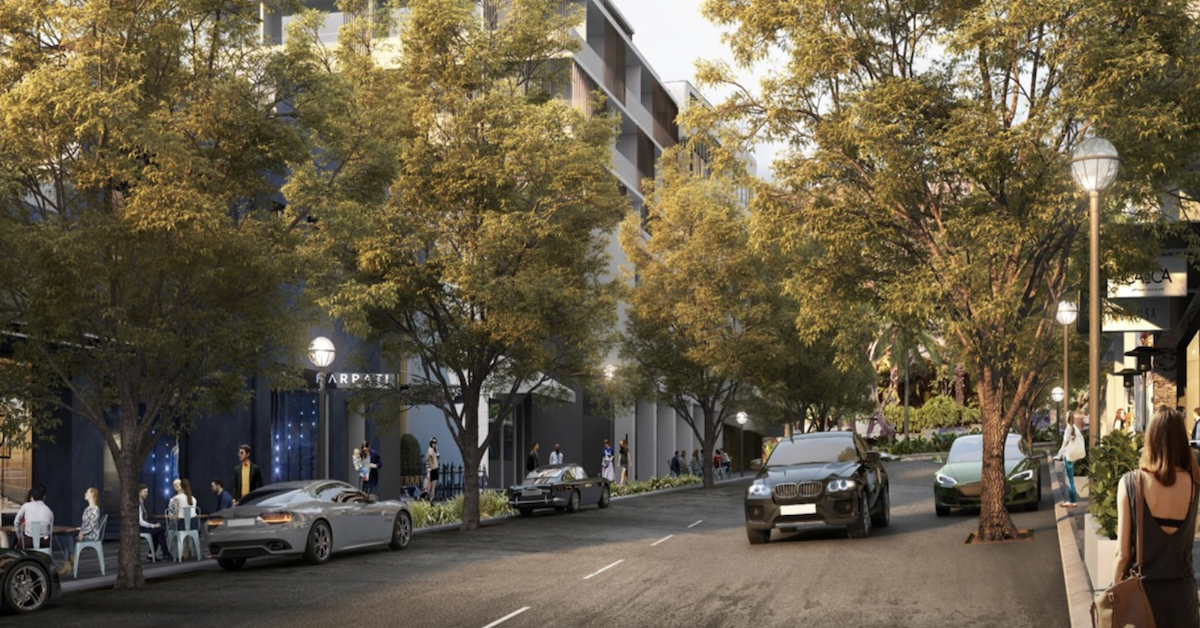
Double Bay has been identified as a Strategic Housing Area under Sydney’s new 20-year planning framework, placing the suburb among the Eastern Suburbs locations expected to accommodate more homes over coming decades.
The designation comes on top of planning changes already affecting the area, where state low and mid-rise housing controls allow greater residential density on eligible land within walking distance of nominated centres. Woollahra Council has opposed those reforms and has repeatedly sought to have Double Bay removed from the policy.
Double Bay singled out for housing growth
Sydney Plan Appendix C — Infrastructure Opportunities Plan identifies Double Bay alongside Bondi Junction, Edgecliff, Woollahra, Randwick Junction, Kensington, Kingsford and Maroubra Junction as Strategic Housing Areas across Sydney’s east.
The wider Sydney and Eastern Suburbs planning area covers the City of Sydney, Randwick, Waverley and Woollahra council areas, which have a combined target of 27,200 completed homes by June 2029 under the National Housing Accord.
The designation does not establish a specific housing target for Double Bay or automatically rezone the entire suburb. It does, however, identify Double Bay as one of the locations expected to contribute to future housing supply as planning authorities direct more growth towards established areas.
Existing rules already allow more density
Double Bay is already one of three nominated low and mid-rise housing precincts within the Woollahra local government area, alongside Edgecliff and Rose Bay.
Under the statewide policy, low and mid-rise housing areas generally extend up to 800 metres walking distance from nominated town centres or stations. The rules increase development capacity by allowing a broader range of housing, including terraces, townhouses and apartment buildings, subject to zoning, site constraints and development assessment.
For residential flat buildings on eligible R3 and R4 land, state standards permit heights of up to six storeys within the inner 400 metres of a nominated centre and up to four storeys between 400 and 800 metres. Separate standards apply to other housing types, while some land is excluded because of heritage, hazard or other constraints.
Woollahra Council says the policy allows substantially greater height and floor space than its existing local planning controls and has raised concerns about heritage, local character, tree canopy, congestion and infrastructure capacity.
The council has formally sought the removal of Double Bay and Rose Bay from the low and mid-rise housing policy.
Strategic label does not mean blanket redevelopment
The new Sydney Plan adds another layer to the planning framework, but it does not mean every street in Double Bay has been earmarked for apartment development.
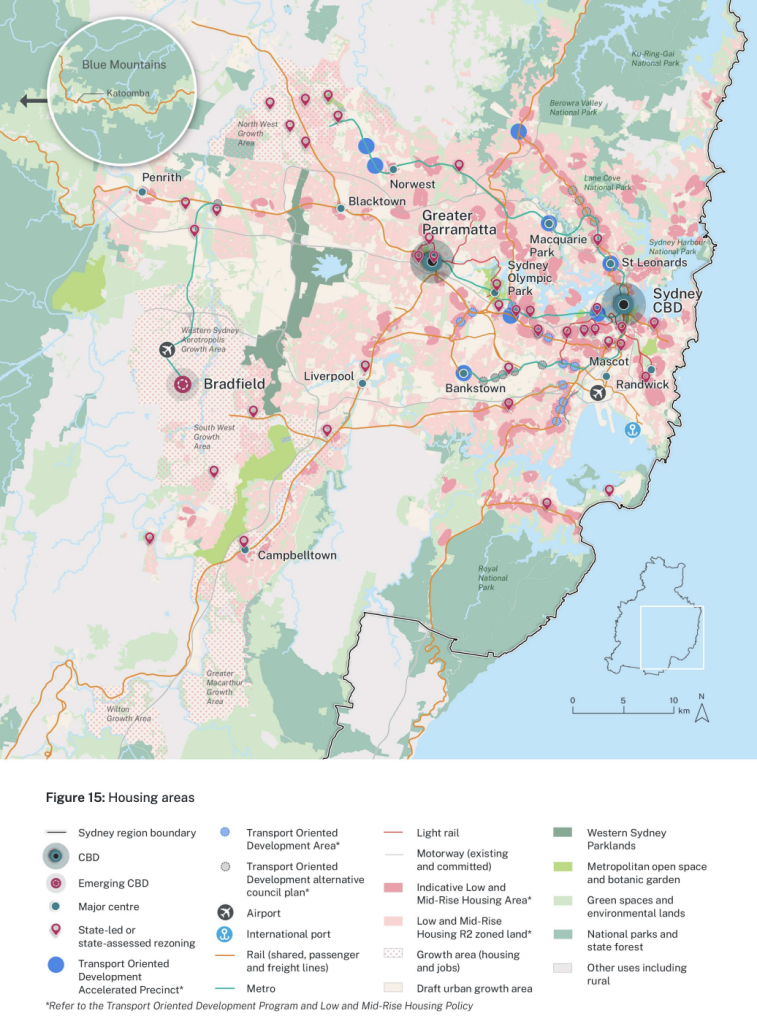
Photo Credit: Planning.NSW.Gov
State housing controls apply differently depending on zoning, distance from the nominated centre and site-specific exclusions. Heritage-listed properties are excluded from the low and mid-rise policy, although Woollahra Council has argued that heritage conservation areas are not given the same blanket protection.
The practical effect for Double Bay will depend on how the Sydney Plan is translated into future local and state planning decisions, and whether additional rezonings or changes to existing controls are pursued.
Double Bay is now affected by both the existing low and mid-rise housing policy and its designation as a Strategic Housing Area. Detailed decisions about the location and scale of future growth remain unresolved.
Published 18-Aug-2026