
Double Bay Earmarked for More Housing Under Sydney Growth Plan

Double Bay has been identified as a Strategic Housing Area under Sydney’s new 20-year planning framework, placing the suburb among the Eastern Suburbs locations expected to accommodate more homes over coming decades.


The designation comes on top of planning changes already affecting the area, where state low and mid-rise housing controls allow greater residential density on eligible land within walking distance of nominated centres. Woollahra Council has opposed those reforms and has repeatedly sought to have Double Bay removed from the policy.

Double Bay singled out for housing growth

Sydney Plan Appendix C — Infrastructure Opportunities Plan identifies Double Bay alongside Bondi Junction, Edgecliff, Woollahra, Randwick Junction, Kensington, Kingsford and Maroubra Junction as Strategic Housing Areas across Sydney’s east.

The wider Sydney and Eastern Suburbs planning area covers the City of Sydney, Randwick, Waverley and Woollahra council areas, which have a combined target of 27,200 completed homes by June 2029 under the National Housing Accord.

The designation does not establish a specific housing target for Double Bay or automatically rezone the entire suburb. It does, however, identify Double Bay as one of the locations expected to contribute to future housing supply as planning authorities direct more growth towards established areas.

Existing rules already allow more density

Double Bay is already one of three nominated low and mid-rise housing precincts within the Woollahra local government area, alongside Edgecliff and Rose Bay.

Under the statewide policy, low and mid-rise housing areas generally extend up to 800 metres walking distance from nominated town centres or stations. The rules increase development capacity by allowing a broader range of housing, including terraces, townhouses and apartment buildings, subject to zoning, site constraints and development assessment.

For residential flat buildings on eligible R3 and R4 land, state standards permit heights of up to six storeys within the inner 400 metres of a nominated centre and up to four storeys between 400 and 800 metres. Separate standards apply to other housing types, while some land is excluded because of heritage, hazard or other constraints.

Woollahra Council says the policy allows substantially greater height and floor space than its existing local planning controls and has raised concerns about heritage, local character, tree canopy, congestion and infrastructure capacity.

The council has formally sought the removal of Double Bay and Rose Bay from the low and mid-rise housing policy.

Strategic label does not mean blanket redevelopment

The new Sydney Plan adds another layer to the planning framework, but it does not mean every street in Double Bay has been earmarked for apartment development.

A section of the Sydney Plan
Photo Credit: Planning.NSW.Gov

State housing controls apply differently depending on zoning, distance from the nominated centre and site-specific exclusions. Heritage-listed properties are excluded from the low and mid-rise policy, although Woollahra Council has argued that heritage conservation areas are not given the same blanket protection.

The practical effect for Double Bay will depend on how the Sydney Plan is translated into future local and state planning decisions, and whether additional rezonings or changes to existing controls are pursued.


Double Bay is now affected by both the existing low and mid-rise housing policy and its designation as a Strategic Housing Area. Detailed decisions about the location and scale of future growth remain unresolved.

Published 18-Aug-2026

Fewer Under-20s Deepen Double Bay and Darling Point’s Age Divide

Almost one in four residents in the Double Bay–Darling Point area is aged 65 or over, while the gap between seniors and under-20s is the widest recorded since 2001.


Australian Bureau of Statistics estimates show the combined area had 2,538 residents aged 65 and over in 2024, compared with 1,424 people under 20. That was a difference of 1,114.

The figures cover the Double Bay–Darling Point Statistical Area Level 2, or SA2. The ABS combines the neighbouring suburbs for statistical purposes and does not provide separate age totals for each suburb in this dataset.

An older age profile for decades

The older age profile is not new. Seniors have outnumbered under-20s since at least 2001, but the gap is now wider than in the earlier comparison years.

Double Bay and Darling Point have had more residents aged 65 and over than under-20s for at least two decades. In 2001, the area had 2,068 seniors and 1,239 people under 20, leaving a gap of 829. The difference was 812 in 2011 and 927 in 2019. By 2024, it had widened to 1,114.

Of the area’s estimated 10,248 residents in 2024, people aged 65 and over made up 24.8 per cent. Under-20s accounted for 13.9 per cent, while residents aged 20 to 64 made up the remainder.

The recent change came mainly from a fall in the number of children and teenagers, rather than a large rise in the senior population. Between 2019 and 2024, the area’s total population fell by 357. The number of under-20s dropped by 161, while the population aged 65 and over rose by 26.

Housing may be one factor

The ABS figures measure the estimated resident population as of 30 June each year. They show how the age mix has changed, but they do not record why people move into or leave an area.

Housing may help explain the age profile, although the population figures alone cannot prove a direct link. Double Bay is known for its shops, cafés and restaurants, which attract visitors from outside the area. Neighbouring Darling Point has a more residential character.

Double Bay and Darling Point contain a mix of apartments and detached homes. Separate property and household data would be needed to measure how prices, rents and dwelling sizes affect families seeking to live locally.

Ageing in place may also contribute. However, the ABS figures do not show how long residents have lived in the area or whether they own or rent their homes.

Photo Credit: Pixabay

Services for older residents and families

Woollahra Municipal Council has identified population ageing in its strategic planning. Council documents have also linked ageing in place with the need for accessible housing near shops, health services and public transport. The older age profile may increase the importance of health services, accessible footpaths, safe crossings and support at home. 

Woollahra Council supports programs for older residents, including Dementia Friendly Woollahra. The Cottage Dementia Day Centre also operates in Darling Point and provides support for people living with dementia.


Still, services for children and families remain part of the local mix. Woollahra Preschool in Double Bay is an 80-place early education and care service for children aged three to five.

Published 23-July-2026

Heritage, Skate Ramps, and Tree Roots: Inside the Decade-Long Transformation of Rushcutters Bay Park

A tiny slice of Rushcutters Bay Park is finally becoming a youth recreation area, marking the end of a ten-year battle over heritage, public space, and the changing needs of Sydney’s eastern suburbs.


Construction has officially begun on the youth precinct, which will occupy just two per cent of the Edgecliff waterfront reserve. Driven by Woollahra Council, the project will feature beginner-friendly skate and scooter facilities, a half-court for basketball and netball, new seating, and fresh landscaping.

The milestone marks the conclusion of a planning marathon. Because the project took more than a decade to move from concept to construction, some local children who were toddlers when the idea was first floated are now teenagers watching the bulldozers roll in.

Planners Target a ‘Recreation Gap’

The push for the facility began after council studies identified a distinct lack of outdoor spaces for children aged eight to 14. While younger children were well-served by local playgrounds, families with older kids reported regularly traveling outside the municipality to find suitable spots for skateboarding, scootering, and informal sports.

Unlike larger, high-impact skate parks across Sydney, this design strictly targets entry-level users.

Supported by local parents and Mayor Sarah Dixson, proponents view the project as a vital investment in families as nearby density and population growth continue to rise. Council planning documents emphasize that the facilities will fulfill a long-standing community need while leaving 98 percent of the park entirely untouched.

Photo Credit: WoollahraCouncil

The Heritage Battleground

The path to construction was heavily contested. As plans progressed, local residents and community organizations, including The Darling Point Society, strongly opposed the development. Critics questioned whether a skate facility was appropriate for a heritage-listed public park, raising concerns over noise, visual impacts, and the loss of open green space. Some argued existing recreational options were already sufficient.

The debate intensified when the park received formal heritage recognition, triggering a wave of mandatory reviews. A rotating door of heritage specialists, archaeologists, and planning authorities was brought in to assess archaeological sensitivity and landscape impacts.

While the extensive review process delayed construction for years, it ultimately shaped a final design intended to blend respectfully into the historic environment—an approach supported by the Australian Institute of Landscape Architects, which noted that heritage landscapes must be allowed to evolve.

Photo Credit: WoollahraCouncil

Upgrades Beyond the Skate Park

The youth precinct is part of a broader, multi-million-dollar effort by Woollahra Council to upgrade Rushcutters Bay Park’s safety and environmental footprint.

Simultaneously, works have been completed near the park kiosk to fix deteriorating, uneven rubber surfaces around heavily trafficked tree roots, which had become major trip hazards. To solve the issue without damaging the trees, engineers installed a permeable, resin-bound paving system by StoneSet. The innovative surface allows water and air to reach the root zones while preventing the microplastic shedding associated with traditional rubber surfaces.

A Blueprint for Modern Urban Parks

Ultimately, the transformation of Rushcutters Bay Park highlights the complex, competing demands placed on modern urban green spaces.


By balancing the immediate active needs of young families with the rigorous conservation demands of heritage advocates, the final park layout serves as a case study in compromise—providing modern community infrastructure while safeguarding historical and environmental assets.

Families Reflect on What’s at Stake for Woollahra Preschool

A highly sought-after community service, Woollahra Preschool, is facing possible changes that could affect its fees, structure and future direction, sparking concern among local families about what could be lost.


The discussion follows a meeting on March 23, 2026, where options to expand the preschool, review fees and seek state funding were formally considered, setting the stage for further consultation with families and staff.

A Preschool That Means More Than Childcare

For years, the preschool has been known for its structured learning environment, smaller peer groups and consistent teaching staff. Families say this model helps children transition into primary school while also giving them time at home.

Some parents describe the preschool as a place where children attend on set days each week, allowing friendships to develop over time. They say this rhythm creates a sense of stability that can be harder to achieve in services with more flexible, rotating attendance.

Others point to the role the preschool plays beyond the classroom. It is often described as a space where parents connect, share experiences and support one another through early childhood.
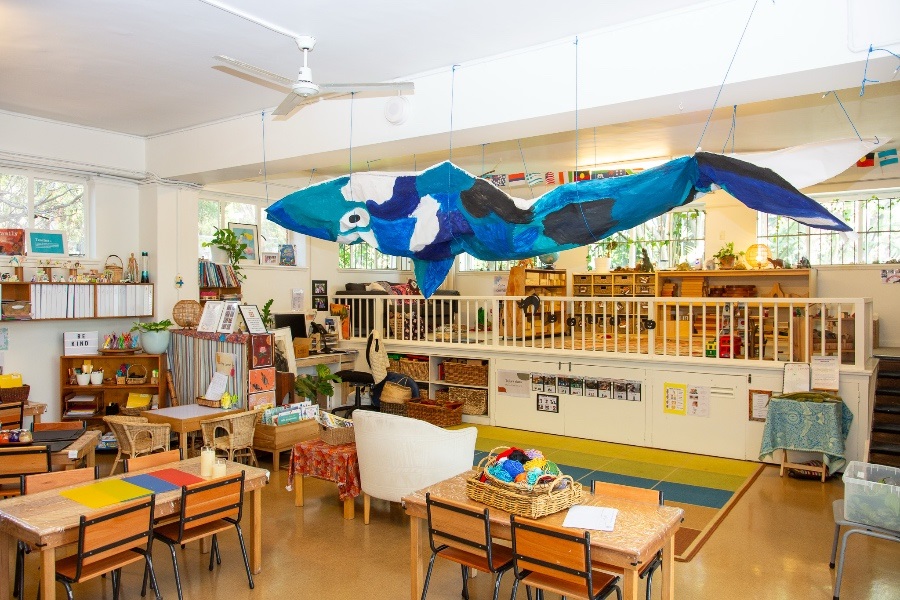
Woollahra Preschool classroom
Photo Credit: Woollahra Preschool

Concerns Over What Could Change

While no final decision has been made, some families are concerned that expanding the service could shift how it operates.

A petition circulating among parents says there are fears the preschool could move closer to a long day care-style model, even if a preschool program remains in place. Families involved in the campaign say they chose the current model for its balance between education and home life, and want to see that preserved.

There are also concerns about accessibility. If fees rise as part of the review, some parents worry it may become harder for local families to secure a place.

Questions have also been raised about how community feedback has been gathered, with some parents saying a survey referenced in the process focused on longer hours rather than broader structural changes.

Council Emphasises Quality and Access

At the same time, there is recognition that demand for places is growing.

The service review looked at whether more children could be accommodated, including through extended weeks of operation, additional hours or even new locations. The aim is to provide more families with access to early childhood education in an area where places are limited.

Part of the plan includes applying for funding from NSW’s Expanded Quality Access Program, designed to support expanded early learning services. This funding could help increase capacity, though details on how it would shape the service are still being worked through.

Council documents state that any expansion should maintain the current quality of care, highlighting this as a key priority moving forward.

The Reality of Running a Preschool

Behind the scenes, the review also examined how the preschool is funded.

Fees are currently set to cover the cost of running the service, rather than to generate profit. However, a recent reassessment found that some costs—such as overheads and building depreciation—had not been fully included in previous calculations.

Updating these figures would bring fees more in line with the actual cost of delivering the service, which is expected to lead to increases. While this is presented as a correction rather than a shift in policy, it has added to concerns about affordability.

Photo Credit: Woollahra Preschool


Balancing Growth With Community Values

As the process continues, the focus is now on consultation.

A public meeting is expected to give families, staff and community members the chance to share their views. Further reporting is due before June 30, 2026, meaning there is still time for feedback to shape the outcome.

Published 10-April-2026

Find Your Flow: Free Community Yoga Comes to Double Bay

Sydneysiders can soon trade the boardroom for a yoga mat at the Double Bay Sailing Club, which is hosting a free waterfront yoga series set to live acoustic music.


This new series, supported by Woollahra Council and run by the Sydney Harbour Yoga Club, invites locals to unroll their mats by the water. The free classes will run weekly from November 2025 to February 2026. Along with Double Bay, the initiative will also use waterfront spaces at Rose Bay Marina and the Vaucluse Yacht Club.

Trading the Daily Rush for a Harbour View

yoga
Photo Credit: Supplied

The “Harbour Flow” program encourages residents to swap their busy schedules for a moment of calm, turning these picturesque decks into community spaces for health. The goal is to make wellness accessible to everyone, from busy professionals to seniors, referred to as “golden warriors,” and mums after the school drop-off.

Participants can expect a unique experience that blends movement with the magic of the sea. Sessions are planned for sunrise and sunset, with special flows under the full moon. Many classes will feature live acoustic music or sound bowls to create a relaxing atmosphere, all set against the backdrop of Sydney Harbour.

More Than Just a Class

yoga
Photo Credit: Supplied

Each event includes a one-hour yoga class suitable for all levels, from total beginners to seasoned yogis. Following the session, attendees are invited to a casual coffee or tea social hosted by local cafés. This initiative is also designed to support the small businesses that give Woollahra its community spirit.

Karin Finlayson, founder of the Sydney Harbour Yoga Club, said the series is about bringing people together and helping them experience the harbour in a completely new way. She emphasised that the classes are for everyone, noting that attendees only need to be curious, not flexible, to join in.


How to Join the Flow

yoga
Photo Credit: Supplied

While the “Harbour Flow” sessions are free, spaces are limited, and both registration and booking are essential. Organisers have noted that as part of this specific community program, each person may attend one free class. Spots are expected to fill quickly.

The Sydney Harbour Yoga Club’s regular paid classes at all three locations will continue as normal throughout the summer. To register for the free series and receive the timetable, locals can visit the club’s website.

Published Date 28-October-2025

Community Opposition Grows Over Netball Courts at Lough Park, Double Bay

A proposal to upgrade grass fields into hard-surfaced netball courts at Lough Park in Double Bay has divided the local community.


Lough Park’s History and Current Use

Lough Playing Fields in Double Bay is a historic park catering to sports such as netball, softball, cricket, and rugby and soccer training. It is also a popular site for walking and jogging. The site was once part of the Cooper family’s Point Piper Estate before being set aside for sporting activities in 1927.

Currently, the facilities include a grassed netball court and two junior synthetic cricket pitches, with dog access permitted under specific conditions.

Save Lough
Photo Credit: Save Lough

Proposal Details and Concerns

Woollahra Council’s $690,000 proposal involves upgrading the existing grass netball fields at Lough Park into acrylic and concrete courts. The proposal includes installing four floodlights, each 10 metres tall, to allow the courts to be used beyond daylight hours and throughout winter.

Planning documents highlight that the development would address unmet demand for informal recreation and training. However, several concerns have been raised, including the impact of hard surface infrastructure, potential increases in weeknight noise from whistles and bouncing balls, intrusive lighting, flood risks, and traffic congestion.

The courts would be available for community use but could also be booked commercially by private companies, leading to further concerns about increased usage and reduced passive space.

Comparison and Alternatives: Existing Infrastructure

Opponents argue that there are already over 72 courts available in or near Woollahra, with more planned. Save Lough Park, one of the action groups, stresses that additional courts should not come at the cost of one of the eastern suburbs’ remaining passive green spaces.

Advocates for field sports also point out that girls increasingly participate in field-based activities such as soccer, AFL, and hockey, challenging the notion that hard courts are the only facilities needed to support female athletes.

Community Sentiment: Divided Views

Community groups such as Save Lough Park and Friends of Lough Park have voiced strong opposition, gathering over 800 petition signatures. They emphasise the environmental, noise, and traffic impacts of the proposal, while stating their support for girls’ sport in principle but questioning the chosen location.

Conversely, supporters, including some councillors and community members, argue that infrastructure for girls’ sports has historically lagged behind that of boys’ sports and that new facilities are essential to rectify the imbalance.

Lough Park
Photo Credit: Save Lough

Next Steps for the Proposal


Woollahra Council has voted to move the Lough Park proposal forward to community consultation. A meeting is scheduled for 28 April, offering the community an opportunity to voice feedback before a final decision is made.

Published 27-Apr-2025

Real Housewives Star Plans Extensive Upgrade in Double Bay

A $23.9 million redevelopment has been proposed for Krissy Marsh’s Double Bay residence, with plans lodged to transform the historic six-bedroom property into a multi-level home featuring wellness and entertainment facilities.


Large-Scale Proposal for Marsh Residence

A major renovation is underway for a luxury property in Double Bay owned by Real Housewives of Sydney cast member Krissy Marsh and her husband Johnny Marsh. Documents lodged with Woollahra Council reveal plans for a $23.9-million redevelopment aimed at aligning the property with the couple’s current needs and lifestyle requirements.

Double Bay home
Photo Credit: Home Beautiful/Instagram

The Marshes purchased the property in 2022 for approximately $30 million. Located in one of Sydney’s most high-profile suburbs, the house is set to undergo significant changes, with the scale of proposed works placing it among the largest developments ever undertaken in the Woollahra Council area.

Planned Features and Scope

The application outlines the addition of a wellness retreat including a sauna, ice bathroom, treatment rooms, and a gymnasium. Further inclusions are a cinema room, outdoor bars, a swimming pool, a cabana, a cellar, a herb garden, a commercial kitchen, and a new basement level with extra parking. New bedrooms are also planned as part of the redevelopment.

The build will reportedly require around 2,000 cubic metres of excavation, roughly equivalent to the volume of an Olympic swimming pool.

Double Bay home renovation
Photo Credit: Home Beautiful/Instagram

Community Reaction

While the owners intend the property to be their long-term residence, the scale of the redevelopment has drawn criticism. The Double Bay Residents Association has formally objected, describing the project as a “gross overdevelopment.” Planning documents argue the impact on neighbouring properties would be minimal.

Council Assessment Underway


Woollahra Council is assessing the proposal as part of its standard development application process. The project’s timeline and final approval remain subject to council review.

Published 15-Apr-2025

Double Bay Intersection Sees 13 Crashes in Five Years as Residents Demand Action

A major intersection in Double Bay has been the site of 13 crashes and nine injuries since 2019, prompting growing concern from residents who say traffic congestion and confusion at the site have reached a crisis point.


Growing Safety Concerns

The crossroads where New South Head Road, Bellevue Road, Cross Street and Kiaora Road meet is often described by locals as one of the most dangerous in Sydney’s eastern suburbs. 

Community members have reported regular near misses and constant traffic jams that disrupt daily life and pose risks to drivers, pedestrians and cyclists alike. According to recent data, the four-way intersection has been the scene of repeated collisions, with some residents stating it’s a surprise no one has been killed.

The intersection’s layout has long caused confusion among motorists. A key issue is uncertainty around which traffic lights apply to which direction, especially for cars turning right from Bellevue Road or New South Head Road. Drivers often hesitate or stop mid-turn, creating blockages and increasing the chance of accidents. A left-turn lane added in 2022 has only added to the confusion for drivers attempting to travel straight through the intersection.

Double Bay
Photo Credit: WoollahraCouncil

Locals Push for Change

Local business owner Pham Yang, who has operated nearby for more than two decades, said the situation has steadily worsened as more drivers unfamiliar with the area get caught off guard by the complex intersection. He described daily scenes of frustration, with drivers frequently honking and shouting as traffic clogs the area.

Woollahra Mayor Sarah Swan said Council continues to hear from worried residents, many of whom believe it’s only a matter of time before a more serious incident occurs. She noted that the city’s engineers have submitted multiple requests to Transport for NSW since early 2022, seeking improvements to ease congestion and reduce safety risks.

Deputy Mayor Sean Carmichael has described the traffic situation as “desperate”, particularly for Bellevue Hill residents who he says are often unable to leave or return to their suburb during peak traffic hours. He first formally raised the issue over two years ago.

Federal Member for Vaucluse, Kellie Sloane, addressed the matter in state parliament last week, describing the intersection as “confusing, congested and dangerous.” She encouraged the transport minister to visit the site to see the problems firsthand. Sloane has also launched a community petition aimed at urging state authorities to take urgent action.

Transport for NSW confirmed that a traffic and safety review was completed in October 2023 and is currently being assessed. A spokesperson for the department said a technical review is underway to identify possible improvements to the intersection and that further steps will be determined once the assessment is complete.

Double Bay
Photo Credit: WoollahraCouncil

Top Priority Request 

Council recently ask Transport for NSW to address several problem intersections along New South Head and Old South Head roads due to ongoing safety and congestion issues.

A top priority in the request was a review of the intersection where New South Head Road meets Bellevue Road, Cross Street and Kiaora Road in Double Bay. 

According to the 2020 Double Bay Transport Strategy, that junction was projected to exceed capacity during morning, evening and Saturday peak hours by 2027. Council now believes that level of congestion is already being experienced.


Ms Swan noted that the intersection is a vital part of the area’s road network and essential for people travelling to work, school, or appointments.

Other intersections included in the request were New South Head Road at William Street, Manning Road, and Wolseley Road, as well as Old South Head Road at Victoria Road. Council hopes these reviews will help relieve pressure on state-managed roads and improve safety for all road users.

Published 7-April-2025

Roma Arcade in Double Bay to Transform with High-End Hotel and Retail

Long-standing Double Bay shopping centre Roma Arcade could soon be transformed into a high-end mixed-use hub featuring hotel rooms, office spaces, and retail stores.


Background of the Redevelopment Proposal

The Roma Arcade, located on New South Head Road in Double Bay, was purchased in March 2024 by education entrepreneur Adrian Fonseca and his wife Nancy Reardon-Fonseca for approximately $21 million. 

Mr Fonseca, who serves as the deputy president of the GWS Giants and is the founder of Oxanda Education, bought the property with his wife as part of a vision to revitalise the area. This acquisition marked the first time in decades that the arcade changed hands, making it a significant transaction for the Double Bay community.

Details of the Proposed Development

The Fonsecas’ plan – DA 393/2024 lodged with Woollahra Council – proposes demolishing the existing arcade structure to make way for a five-storey complex with a mix of functions designed to attract both locals and visitors. 

Roma Arcade
Photo Credit: Before/Google Maps

According to the planning documents prepared by GSA Planning, the new development would house three levels dedicated to retail and office space and feature 15 studio-style hotel rooms across the third and fourth levels. Each hotel room would be designed with ample natural light and small balconies to provide an open, airy feel, appealing to tourists seeking a boutique experience. 

Roma Arcade
Photo Credit: After/DA 393/2024

According to the proposal, the rooftop will be transformed into a terrace, adding an extra community-oriented element for relaxation and gatherings. Fonseca’s team has indicated that the new centre will blend well with Double Bay’s “desired future character,” aiming to create a high-quality, modern space that fits within the area’s growing commercial and social environment.

Community Impact and Economic Potential

The proposed redevelopment is expected to generate new employment opportunities for Double Bay, replacing the existing structure with a facility that incorporates retail, office, and accommodation elements. Planners believe that the new complex will draw in more visitors and contribute to the local economy by providing additional shopping, work, and stay options. 

The hotel rooms, especially, are expected to attract tourists and business travellers, further boosting local businesses and encouraging longer stays in the area.

Roma Arcade
Photo Credit: After/DA 393/2024

Oliver Meehan, head of development at Oxanda Education, describes the Roma Arcade project as a vital part of Double Bay’s “tremendous revitalisation,” aiming to bring modern amenities and high-quality architectural design to the neighbourhood. By focusing on both retail and office spaces, as well as accommodation, the development offers more varied business opportunities than the existing structure, which has historically hosted a smaller selection of shops.

Next Steps and Community Response

Pending council approval, the redevelopment will move forward, with the demolition and construction phases likely to follow shortly after. Woollahra Council’s decision will weigh the potential benefits of increased economic activity and tourism against considerations from local residents and business owners who may be impacted by construction. 


Community members and stakeholders are encouraged to provide feedback during the planning review process to ensure the redevelopment aligns with the needs and expectations of Double Bay’s residents.

Published 15-Nov-2024

New Housing Development on New South Head Road in Double Bay

A new housing development project, valued at $12 million, is set to bring a fresh vibe to New South Head Road, one of the busiest streets in Double Bay.

Photo Credit: Woollahra Municipal Council DA 28/2024

The project, a collaboration between Primo Development Double Bay and Sayed Holdings, is conveniently located just a short stroll from the Double Bay Centre. The existing structures at 426-440 New South Head Road are set to be replaced as part of this development.


The new building will feature four retail spaces, 13 residential units, and 28 car parks. The residential apartments will be located on the ground floor and all upper levels, above the retail tenancy level.

Photo Credit: Woollahra Municipal Council DA 28/2024

The proposed development is a five- and six-storey shop-top housing complex with two levels of basement parking. The site, which comprises six allotments, is currently occupied by one commercial building and two shop-top housing developments.


This project represents a significant investment in the area and is expected to bring a fresh new look to Double Bay’s skyline.

Published 5-February-2024